


The Hidden Impact of Depression on Daily Life
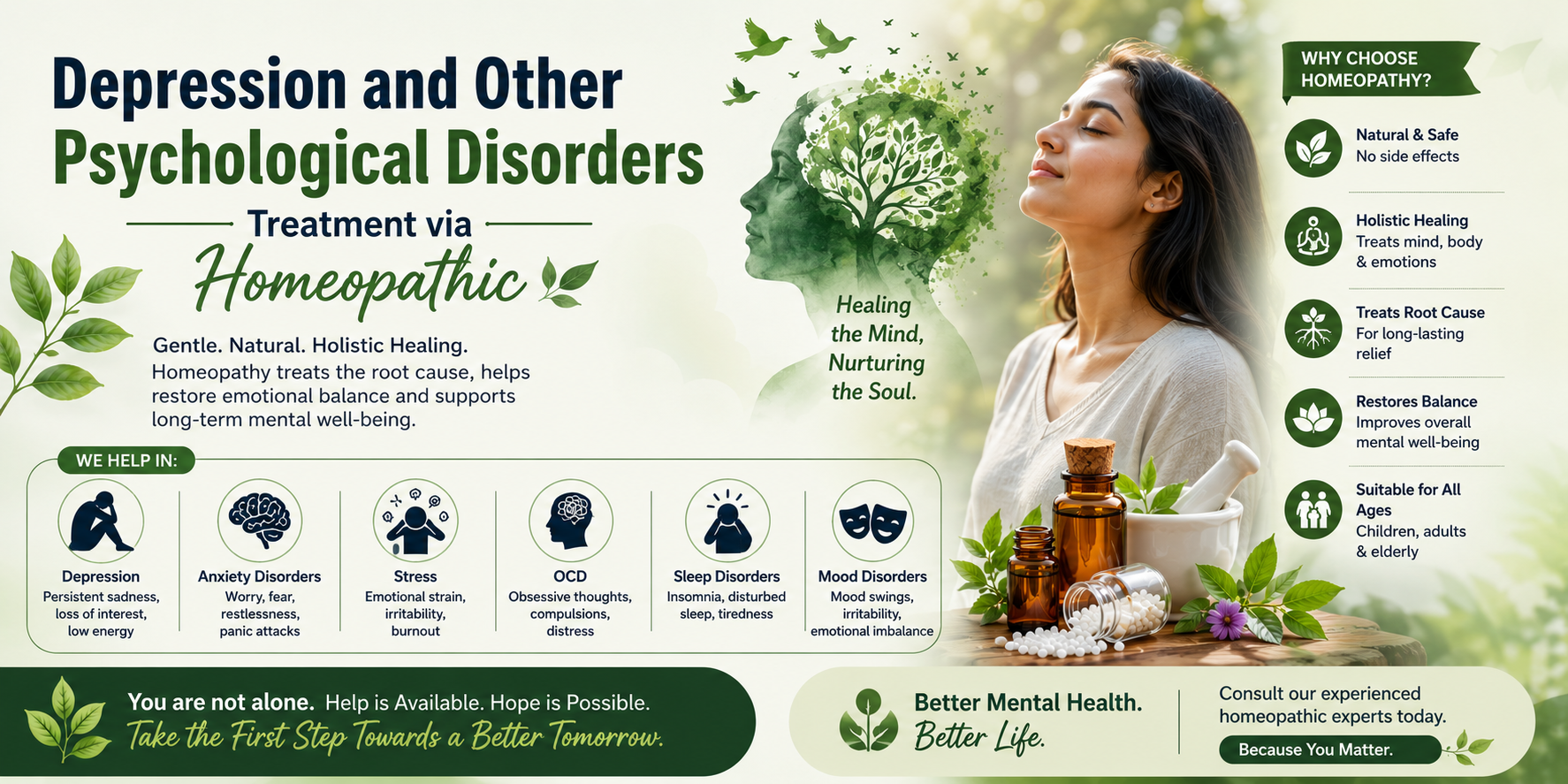
What is depression and psychological disorder?
Depression is a common mental health condition where a person feels persistent sadness, loss of interest, low energy, and hopelessness for a long period. It affects thinking, behavior, sleep, appetite, and daily life. Depression
Common symptoms include:
- Persistent sadness or low mood
- Loss of interest in activities
- Fatigue or low energy
- Difficulty concentrating
- Changes in sleep (too much or too little)
- Changes in appetite or weight
Common Types of Depression and other psychological disorders (Easy to Understand)
Psychotic Disorders
Psychotic disorders are severe mental health conditions in which a person loses contact with reality.
Obsessive-Compulsive Disorder
Obsessive-Compulsive Disorder (OCD) is a mental health condition where a person gets stuck in a loop of unwanted thoughts and feels driven to do certain actions repeatedly to reduce anxiety..
Compulsions (behaviors)
Compulsions in Obsessive-Compulsive Disorder are repetitive actions or mental rituals that a person feels driven to do in order to reduce anxiety caused by obsessive thoughts.
Persistent Depressive Disorder (Dysthymia)
The symptoms are usually less severe than major depression, but they last much longer. People may still manage daily tasks, but they often feel tired, unmotivated, have low self-esteem, and struggle to enjoy life.
Major Depressive Disorder
This is the most common form of clinical depression. It involves persistent low mood, loss of interest in activities, fatigue, sleep problems, and sometimes feelings of hopelessness lasting at least two weeks or more.
What homeopathy is claimed to do
- Homeopathy is claimed to stimulate the body’s natural healing ability.
- It aims to treat the person as a whole rather than focusing only on the disease or symptoms.
- Homeopathy is believed by practitioners to help restore emotional, mental, and physical balance.
- It is claimed to reduce symptoms such as stress, anxiety, sadness, irritability, and sleep disturbances.
- Homeopathic remedies are selected according to an individual’s unique symptoms, personality, and emotional state.
- Practitioners claim that homeopathy may improve overall well-being and quality of life.
Homeopathic treatment may help in:
- Managing stress and emotional imbalance
- Supporting relaxation and calmness
- Improving sleep disturbances and fatigue
- Helping individuals cope with anxiety and nervousness
- Supporting emotional well-being in people with Depression
- Reducing irritability, mood swings, and restlessness
Treatment is individualized, meaning medicines are selected according to the person’s symptoms, personality, fears, triggers, and emotional condition.
Lifestyle Tips Along With Homeopathy
- Maintain a regular sleep schedule and get adequate rest.
- Eat a balanced and nutritious diet rich in fruits, vegetables, and whole grains.
- Exercise regularly to support mental and physical well-being.
- Practice relaxation techniques such as meditation, yoga, or deep breathing.
- Stay socially connected with family and supportive friends.

Frequently Asked Questions From Patients
Yes, homeopathy aims to manage anxiety, stress, overthinking, panic feelings, and emotional imbalance naturally by treating the individual holistically.
Homeopathic medicines are generally considered gentle and are prescribed according to the patient’s symptoms, emotional condition, and overall health.
The duration varies from person to person depending on the severity, duration of symptoms, lifestyle, and emotional factors involved.
Yes, homeopathic treatment may help improve sleep quality, calm the mind, and reduce stress-related insomnia naturally.
Homeopathy may provide comfort for some people, but there is no strong scientific evidence that it treats clinical depression effectively. It should not replace medical or psychological treatment.